

Header bidding and real-time bidding are closely connected, but they are not the same thing.
RTB is the auction process that allows ad impressions to be bought and sold in real time. Header bidding is a publisher-side technique that uses real-time bidding to let multiple demand partners compete before the ad server makes its final decision.
For publisher monetization, this distinction matters. RTB explains how real-time auctions work. Header bidding explains how publishers can create more competition for their inventory, improve demand access and support stronger programmatic yield.
The challenge is that more competition also needs better control. Without the right setup, publishers can face latency, duplicated demand paths, heavier wrappers and unclear bidder contribution.
That is why header bidding and RTB should be understood as part of a broader ad revenue optimization strategy, not only as technical auction concepts.
Introduction
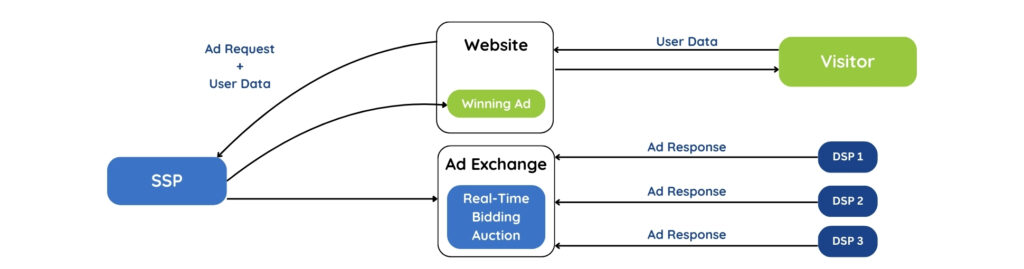
In the world of programmatic advertising, real-time bidding is a process that makes the buying and selling of ad impressions in real-time a reality through auctions that take place online, and the winning bid gets to display its ad on a particular ad space. These real-time ad auctions take place via an ad exchange. Several different type of auctions fall under RTB, including private marketplaces (invite-only) and open auctions (where anyone can join).
Header bidding, while related, is a separate process. As we reviewed two weeks ago, header bidding is an advanced programmatic advertising technique where publishers are able to call on and collect multiple bids from various demand sources simultaneously before their own ad server is called. This process helps them maximize revenue by guaranteeing that only the highest bidder is chosen, and makes advertisers compete amongst each other to reach the desired ad space.
This entire process is very fast – around 400 to 800 milliseconds on a desktop computer and 800 to 1200 milliseconds on a mobile device!
From a publisher’s point of view, real-time bidding is definitely more profitable than direct deals, but header bidding takes a step further! Header bidding creates even more competition, driving bids up even further, and maximizing ad revenue.
This is why the conversation has moved beyond simply understanding RTB or implementing header bidding. Publishers now need to understand how both support publisher monetization, programmatic yield and long-term ad revenue optimization.
History
Before programmatic advertising, much of digital advertising relied on direct deals, manual insertion orders and bulk inventory sales. Publishers would sell inventory directly to advertisers at agreed rates, while unsold or lower-priority inventory often moved through ad networks.
This gave publishers a way to monetize inventory, but it limited real-time competition. Deals were often negotiated in advance, and pricing did not always reflect the real value of each impression at the moment it became available.
RTB changed this by allowing ad impressions to be auctioned in real time. When a user loads a page, buyers can evaluate the impression based on available signals such as audience, context, placement and demand conditions.
This helped publishers move toward more automated and data-driven monetization. However, early RTB implementations often relied on waterfall bidding, where demand partners were called one after another based on a predefined order.
Waterfall bidding created structure, but it also created missed opportunities. A buyer lower in the chain might have been willing to pay more, but never had the chance to bid.
Header bidding improved this model by allowing several demand partners to compete at the same time before the ad server decision. This gave publishers more control over competition and helped reduce missed revenue opportunities.
According to Statista, in the United States, header bidding has greatly been adopted by the programmatic advertising industry, with 70% of online publishing websites expected to be using header bidding technology by Q1 20225.

Relationship Between Real-Time Bidding (RTB) and Header Bidding
Real-time bidding and header bidding are connected, but they are not interchangeable.
RTB is the auction mechanism. It allows advertisers to bid for impressions in real time through programmatic auctions. These auctions can happen through open exchanges, private marketplaces and other programmatic routes.
Header bidding is a publisher-side technique that uses RTB to create more simultaneous competition. Instead of offering inventory through a sequential waterfall model, publishers can call multiple demand partners in parallel before the ad server makes the final decision.
The simplest way to understand the relationship is this:
RTB explains how real-time ad auctions work. Header bidding explains how publishers use those auctions to improve competition for their inventory.
This matters because more competition can support stronger programmatic yield, but only when the setup is properly managed. Bidder selection, timeout settings, wrapper performance and reporting all influence the final revenue impact.
A publisher may add more demand partners and still struggle to understand which ones create real value. Some partners may improve competition in specific formats or markets. Others may duplicate demand, add latency or create reporting noise.
This is where ad stack optimization becomes important. Publishers need to connect auction setup, demand partner performance, page speed and revenue outcomes in a way that is measurable and manageable.
DSPs and SSPs
DSPs and SSPs are key parts of the programmatic ecosystem.
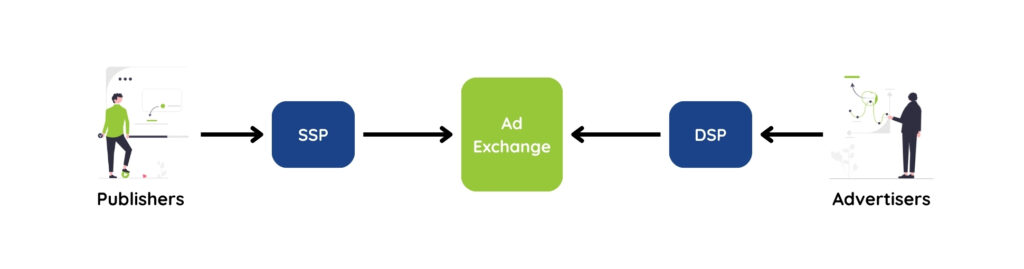
Advertisers use DSPs to buy inventory across different publishers and platforms. Publishers use SSPs to make their inventory available to buyers and manage demand access.
In RTB, SSPs help make publisher inventory available for real-time auctions. DSPs evaluate those opportunities and place bids on behalf of advertisers.
In header bidding, publishers can connect multiple SSPs and demand partners through the wrapper. This creates more competition before the ad server decision, but it can also make the setup more complex.
For publishers, the important question is not only how many partners are connected. It is which partners create incremental value, which demand paths overlap and which configurations affect speed, viewability and revenue.
This is also where SPO principles can support better decision-making. Publishers need to understand which routes bring real value and which ones add unnecessary complexity.
Price Floors
Price floors help publishers protect the minimum value of their inventory.
In RTB, a price floor sets the minimum bid required for an impression to be sold. If bids fall below that threshold, the impression is not sold through that route.
In header bidding, price floors can be applied across multiple demand partners at the same time. This can help publishers protect inventory value while buyers compete in real time.
The challenge is that static price floors can become too rigid. If floors are too high, publishers may lose fill. If they are too low, they may leave revenue on the table.
Dynamic price floor strategies can help publishers adjust pricing based on demand, placement, audience, device or seasonality. This supports stronger ad revenue optimization, especially when pricing decisions are connected to auction data and performance insights.
Price floors are useful, but they should not be managed in isolation. Their impact should be measured alongside fill rate, eCPM, Page RPM, viewability and user experience.

Conclusion
Real-time bidding and header bidding have both changed how publishers monetize digital inventory.
RTB introduced the possibility of real-time ad auctions. It allowed impressions to be valued at the moment they became available, based on demand, audience, context and placement signals.
Header bidding built on that foundation by giving publishers a better way to create competition before the ad server decision. By calling multiple demand partners at the same time, publishers can reduce the limits of sequential models and create stronger auction pressure.
But the value of header bidding and RTB depends on how well they are managed.
More demand does not automatically mean better revenue. Publishers need to understand bidder contribution, latency, price floor impact, wrapper performance and inventory quality.
That means header bidding and RTB should be connected to ad revenue optimization and ad stack optimization.
Ad Manager Hub helps publishers bring these elements together through a faster wrapper, smarter configuration controls, connected analytics and continuous optimization support.
To learn how Ad Manager Hub can support your monetization setup, contact us.
FAQs
RTB is the real-time auction mechanism used to buy and sell ad impressions. Header bidding is a publisher-side technique that uses RTB to let multiple demand partners compete before the ad server makes the final decision.
Yes. Header bidding uses RTB as its auction foundation, but it is not the same thing. RTB describes the real-time bidding process, while header bidding describes how publishers create simultaneous demand competition.
Header bidding can improve programmatic yield by allowing more demand partners to compete for the same impression at the same time. This can help publishers capture more value from inventory when the setup is properly optimized.
Ad revenue analytics helps publishers understand which bidders, placements, floor prices and timeout settings are improving performance. This makes it easier to optimize auctions without adding unnecessary complexity.