

Publishers often look for more demand to increase advertising revenue. More buyers, more partners and more auction pressure can create new opportunities, but they can also make the programmatic supply chain harder to control.
Each additional intermediary can affect transparency, latency, reporting, operational workload and the share of revenue that ultimately reaches the publisher.
That is why supply path optimization matters. For publishers, SPO is not only about reducing intermediaries. It is about understanding which demand paths create real value, which partners improve auction competition and which routes add complexity without enough return.
A stronger SPO strategy helps publishers improve demand quality, protect inventory value and build a more transparent monetization setup without relying only on adding more partners.
This article explores how SPO works, its direct benefits to publishers, and how its tied to sustainability.
What Is Supply Path Optimization (SPO)?
Supply Path Optimization, or SPO, is the process of improving the route between buyers and publisher inventory.
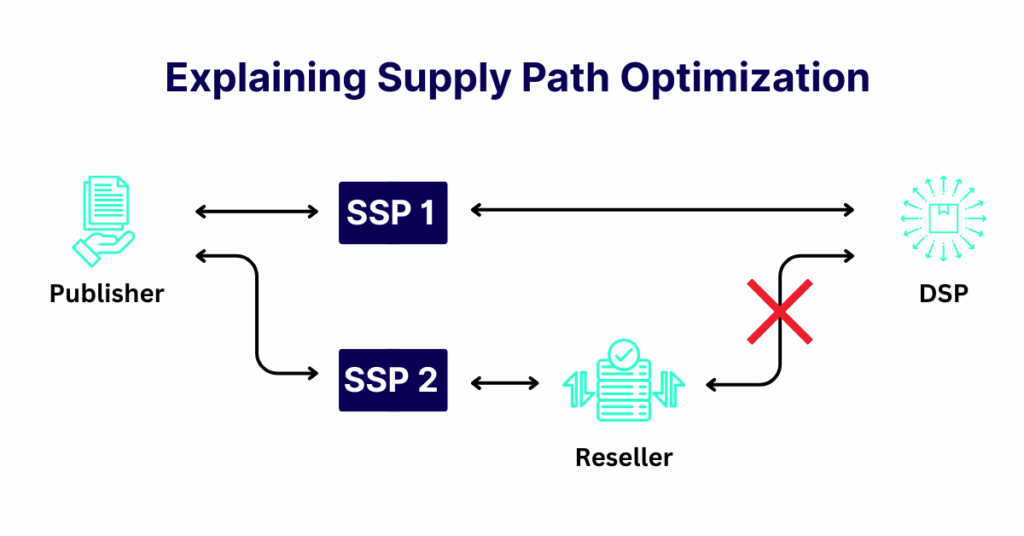
In programmatic advertising, the path between an advertiser and a publisher can involve several intermediaries. Some of those paths create value by bringing unique demand, stronger competition or better buyer access. Others may add duplication, fees, latency or reporting complexity without meaningfully improving revenue.
For publishers, SPO is about understanding which demand paths are worth keeping, which ones need to be improved and which ones may be adding unnecessary complexity.
Header bidding made it easier for publishers to connect with multiple demand partners and increase auction competition. But it also introduced a new challenge: more paths, more intermediaries and more operational weight.
For a single ad placement, publishers may have dozens of possible demand connections. Some may bring incremental value. Others may simply duplicate access to the same buyers or slow down the auction.
SPO helps publishers separate valuable demand paths from unnecessary complexity. It gives revenue teams a clearer way to evaluate demand quality, improve transparency and protect the value of their inventory.
How SPO Helps Publishers
There are three main key ways Supply Path Optimization benefits publishers.
Unlock Higher Yield
One of the most immediate benefits of SPO is increased revenue.
When publishers reduce the number of intermediaries, the remaining direct SSPs that a publisher works with are going to get a bigger market share. This means they will win auctions more frequently and get to display impressions more frequently (probably at a lower price because competition will be lower).
Thanks to this activity, the mathematical models for buying and selling inventories in DSPs and SSPs will show that these streamlined paths have a higher profitability per request. This metric — revenue per thousand requests (RPM) — is a key inventory quality KPI.
As that KPI increases, the volume of demand going through these remaining paths will increase and they will spend more on the publisher, offsetting the loss of revenue coming from resellers.
Additionally, fewer intermediaries mean improved ad performance — faster loading times, reduced latency, and a smoother user experience. Ad performance is directly tied to user experience.
Supply Path Optimization ultimately helps publishers retain audiences and sustain long-term revenue growth.
Transparency in Your Partnerships
With numerous intermediaries involved in the programmatic advertising supply chain, publishers often struggle to track where their revenue is going. Often, the advertising supply chain is often criticized for its lack of transparency.
Publishers who implement SPO can more easily track where their revenue is coming from, identify inefficiencies, and make data-driven decisions about which partners provide the most value. This enhanced media buying transparency is crucial in an environment where ad fraud and opaque practices are rampant.

By choosing high-performing, trustworthy partners, publishers can reduce ad fraud risks, avoid low-quality inventory, and ensure their ads appear in the best environments.
Stronger relationships with fewer but more reliable partners also enable better pricing, improved efficiency, and a more strategic approach to programmatic advertising.
This kind of efficient ad buying strategy benefits both the publisher and the advertiser.
Enhance Competition
With SPO, publishers can ensure that each participant brings measurable value to the table.
This streamlining pushes SSPs to offer better terms and higher-quality inventory.
Publishers gain more control over their programmatic strategy, and encourage healthier competition in the programmatic ecosystem.
Sustainability and Supply Path Optimization
The industry’s reliance on numerous intermediaries and the need for extensive data processing has largely been overlooked, but sustainability has become an important focus in programmatic advertising, and Supply Path Optimization (SPO) helps in this effort.
SPO significantly reduces the carbon footprint of programmatic advertising. By eliminating unnecessary data transfers and server usage, publishers can lower their environmental impact without sacrificing the quality or effectiveness of their operations and inventory.
Through smarter, more efficient processes, brands and publishers can reduce emissions, ultimately benefiting both their bottom line and the planet.
Traffic Shaping and SPO
Another concept associated with Supply Path Optimization is traffic shaping.
While SPO focuses on reducing the number of intermediaries and optimizing the overall structure of the supply path, traffic shaping operates at a more granular level, giving publishers control over the quality and relevance of the ad requests they send to demand partners.
With Demand Hub, we use advanced traffic shaping models to segment audiences in real time based on signals like location, device, and browsing behavior, among others. This allows us to filter ad requests strategically, reducing throttling by the buy-side and tailoring strategies for each segment.
Fully automated and powered by machine learning, this system continuously evolves using publisher audience and revenue data to optimize performance across partners like Google, Prebid, and Amazon.
Through Demand Hub, publishers can apply SPO and traffic shaping together to reduce unnecessary ad requests, improve partner efficiency, and send higher-quality opportunities to the demand sources most likely to value them.
The Future of SPO for Publishers
As programmatic advertising continues to evolve, the role of Supply Path Optimization (SPO) will only grow in importance.
The industry is moving towards greater automation, sustainability, and more sophisticated data-driven decision-making (just take a look at all the focus on AI!) and publishers who adopt Supply Path Optimization earlier rather than later will be well-positioned to take advantage of these advancements.

The integration of SPO with advanced analytics and reporting tools will also be crucial. Publishers will need real-time insights into the performance of their supply paths to continuously optimize their strategies. This includes monitoring key metrics such as fill rates, eCPMs, and revenue by demand partner.
By ensuring that they work with a smaller, more trusted group of demand partners, publishers can future-proof their ad operations and build stronger, more sustainable revenue streams.
Conclusion
Supply Path Optimization (SPO) offers immense potential for publishers to unlock higher yield, fine-tune their partnerships, and enhance competition.
Incorporating SPO into your ad strategy isn’t just about immediate improvements; it’s about building a more transparent, efficient, and sustainable advertising mode.
By optimizing the programmatic advertising supply chain, refining ad buying strategies, and fostering stronger relationships with demand partners, publishers can take control of their monetization efforts and thrive in the competitive world of programmatic advertising.
FAQs
Supply path optimization for publishers is the process of evaluating and improving the routes buyers use to access publisher inventory. It helps publishers identify which demand paths create value, which ones add unnecessary complexity, and where more transparent, efficient access can improve monetization. Demand Hub supports this by helping publishers build a more controlled approach to demand quality and supply path performance.
Demand Hub supports supply path optimization by helping publishers improve demand quality, reduce unnecessary complexity and better understand which demand paths contribute real value. It connects premium demand, traffic shaping and supply path clarity so publishers can strengthen auction competition without simply adding more partners to the stack.
Traffic shaping complements SPO by improving the quality and relevance of the ad requests sent through demand paths. While SPO improves the structure of the supply chain, traffic shaping helps publishers send more relevant opportunities to demand partners. In Demand Hub, traffic shaping supports a cleaner demand strategy by helping publishers reduce waste and improve partner efficiency.