

Programmatic A/B testing is a method that compares two versions of a specific setup to see which one has a bigger impact on website performance, revenue, and UX.
It helps publishers make more informed decisions about their revenue strategy instead of relying on assumptions or hypotheses.
Why A/B Testing Matters for Publishers
Publishers operate in an environment where user behavior, device trends, and market demand shift constantly. To keep programmatic advertising revenue stable and growing, publisher ad monetization strategies must be driven by real data rather than assumptions.
Programmatic A/B testing is one of the most effective tools for achieving this. It helps teams uncover which configurations boost revenue, which tactics weaken performance, and where yield optimization efforts should be focused.
Structured experimentation has become a core component of successful programmatic ad management because it shows exactly how adjustments affect both revenue and user experience. A/B testing reveals the true impact of untapped opportunities!

It is also a low risk way of testing things. For example, publishers can start with only applying a specific change to 5% of their traffic, and immediately get a taste of how a change may impact revenue, user experience, ad speed, or overall site performance. This small sample provides valuable insights without exposing the entire site to potential risks.
Publishers can test many variables, including demand partners, pricing, loading behavior, ad density, placements, and cross device performance. Over time, this experimentation strengthens yield optimization and creates a healthier, more profitable adtech stack.
How Programmatic A/B Testing Works
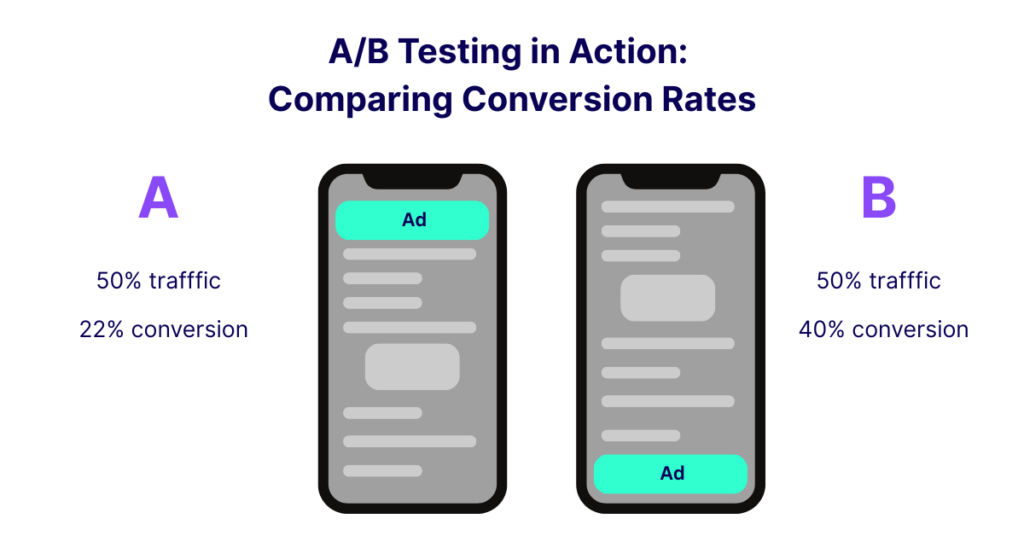
A/B testing divides traffic into two groups. One group maintains the current configuration while the other is modified and becomes the experimental group.
After enough impressions are collected, the results are compared using important publisher ad monetization KPIs.
High Value A/B Tests That Improve Revenue
Here are some common programmatic A/B testings done by publishers in order to boost their overall revenue.
1. Header Bidding and Partner Tests
SSPs vary in win rate, bid density, response time, and eCPM. A/B testing helps identify which partners deserve more traffic and which ones reduce efficiency.
Typical tests include:
- Adding or removing specific SSPs to optimize competition.
- Testing configurations like Server-Side Header Bidding to reduce page latency.
- Adjusting auction timeouts or wrapper logic to maximize high-value bids without slowing the user experience.
2. Format and Placement Tests
Users interact differently with each ad format. A/B testing helps determine which placements provide the best combination of visibility and non intrusive experience.
Common tests include:
- Implementing and sizing sticky units (e.g., footers or sidebars).
- Testing native ad formats for engagement and premium $eCPM$.
- Optimizing in-content placements.
- Testing various lazy loading behaviors to protect Core Web Vitals.
3. Ad Refresh Tests
Smart refresh rules can increase impressions when used responsibly.
Useful tests include:
- Comparing fixed Time-Based Refresh versus smarter Viewability-Based Refresh.
- Testing Engagement-Based Refresh rules tied to specific user activity, like prolonged scroll or mouse movement.

4. Dynamic Ad Insertion Tests
Ad spacing and density significantly influence performance. Programmatic A/B testing allows publishers to compare different insertion patterns to find the ideal balance between yield and user experience.
Common tests include:
- Varying the number of paragraphs or content segments between ad slots.
- Testing different overall ad densities across various content types or between desktop and mobile devices.
Important KPIs in A/B Testing
To judge A/B test results accurately, publishers must monitor the right metrics. By adding more ads to a page, revenue might increase, but that does not always mean the change is beneficial. It is important to dig deeper and check whether ad quality drops, eCPM declines, or user experience suffers.
Evaluating the full picture ensures that publisher ad monetization remains sustainable, not just higher in volume.
Here are some KPIs to track before deeming an A/B test a success:
- eCPM: Shows how much each impression is worth on average.
- RPM (Revenue per thousand page views): This is the core profitability metric because it reflects pricing, impression volume, and fill rate combined.
- Fill rate: Indicates how many ad requests receive a filled impression. Low fill may reveal partner or pricing issues.
- Viewability: The percentage of impressions actually seen by users. Higher viewability increases auction value.
- Latency: The time ads take to load. High latency harms user experience and auction performance.
A winning A/B test improves one or more KPIs without harming user experience.
A/B Testing With Opti Digital Is a Unique Advantage
Very few partners provide true A/B testing for publishers, and even fewer offer a structured, data driven approach. Opti Digital allows publishers to test revenue impact, ad quality, user experience, and auction behavior using real traffic in a safe and controlled environment.
Opti Digital also connects A/B testing results directly with web performance insights. Our tools show how each change affects ad speed, rendering behavior, and Core Web Vitals such as LCP, CLS, and interaction delays. Publishers can compare monetization data and performance data simultaneously. Get in touch with our team to start taking advantage of this unique asset!
Key Takeaways
By experimenting with partners, pricing, layouts, formats, refresh rules, and device specific behavior, A/B testing allowed publishers to find opportunities to maximize revenue while protecting user experience.
Continuous testing strengthens yield optimization and builds a more competitive and efficient programmatic ad management strategy.

FAQs
It is a method where publishers compare two versions of their ad configuration to determine which one produces higher revenue and better user experience.
By measuring the performance of different SSPs, floor prices, placements, and refresh rules, publishers can identify tactics that raise RPM and remove tactics that reduce performance.
A/B testing should be continuous. Because programmatic behavior changes often, regular testing ensures stable optimization throughout the year.